Friday, March 09, 2012

दिल के अरमाँ आँसुओं में बह गए

When you listen to this song, even without knowing its context1, you can sense the feeling of sadness that the singer exudes. But, when you understand the meaning of the lines, it is even more touching. In particular, the feeling of loneliness — हम वफ़ा करके भी तनहा रह गए — is not something that anyone relishes.

You wish always that no one goes through the kind of feeling that the song describes.

(After I published this post, I learnt that Ravi, the music director for this song, passed away just two days earlier).


Wednesday, March 07, 2012

कसमे वादे प्यार वफ़ा

Why the singer shows despair in this song is not clear in my memory, although there seems to be a parallel between the singer's despair, and the main character's. Nice music only makes it memorable.


Saturday, February 18, 2012

ये इश्क, हाये, ...

A female expresses her love to her lover. She starts:

"There must be a reason why, just like that, living has become fun [& pleasant]" and goes on:
"This love ... has shown me heaven."


Thursday, February 16, 2012

आगे भी जाने न तू, पीछे भी जाने न तू

The song starts out on a philosophical note: "You don't know the future, you don't know the past, whatever there is, is just the present moment ..."

How this philosophical note is woven into the music, and the story, is somewhat of a unique contribution of Bollywood to world cinema.

"Living in the present" is such a popular phrase that, if you google for it, you'll find many web sites that collect quotes on that subject. One example is Famous Quotes on Living in the Present... posted by John Kuypers.


Monday, February 06, 2012

साथिया ... साथिया ... पगले से दिल ने ये क्या किया

The female lover sings how her [miscreant] heart has chosen its lover without her knowledge ... 

The poet has chosen to refer to the heart in third person, as though the real she is different from her heart. Such separation helps in understanding when the heart does good things and bad, a clear ingredient in making the head rule the heart. That all of this woven to memorable music is, of course, the beauty of this creation.


Saturday, February 04, 2012

लग जा गले के फिर ये रात हो न हो

Image Source: Wikipedia
This song is an interesting way to convey that the relationship has to end. My blogger friend Atul has a greater description of the context of this song.

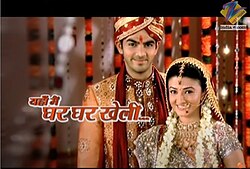
I encountered this song in a recent episode of यहाँ मैं घर घर खेली. Looks like TV serial producers in India have been making use of past melodies from Bollywood films to suit their stories.

Good business for those owning copyrights on these old songs.


Sunday, January 29, 2012

नीला आसमाँ सो गया (female)

This is the Lata Mangeshkar version that sings about lost love.
"The night got killed when the moon disappeared in [my] tears.
Loneliness is what fills in [the rest of my] life"
The music punctuates the narration of the story nicely to bring out the emotion. You can relish the male version here.


Wednesday, January 25, 2012

फूल तुम्हे भेजा है ख़त में, फूल नहीं मेरा दिल है

"I have sent you a flower in this letter, but it is my heart and not just a flower,
Oh, my dear, please write me, whether this [heart] is worthy of your liking."

This kind of poetic outpour is at least good to visualize, even if one is not able to express it to one's lover.


Tuesday, December 06, 2011

ಅವರಿವರಾ ಜೊತೆ ಸೇರದೇ, ಅವರಿವರಾ ನುಡಿ ಕೇಳದೇ

The song is about lovers' romantic overture to each other, although one line in the lyrics is somewhat baffling: ನನ್ನನ್ನಷ್ಟೇ ... ಸಾಯೋ ಹಾಗೆ ನೀನು ಪ್ರೀತಿಸು1. The male lover exhorts the female "to love only him ... so as to make him -- her? -- feel dead." I wonder what the lyricists had in mind. This song is penned by two lyricists: Shashank Raj and Yogaraj Bhat.

As usual in Indian movies these days, this is a dream sequence that escapes from the main story line; nevertheless, there is a certain believable aspect to it.

Why I did I have to write a blog post on this song? Sonu Nigam is the male singer, of course, and the musical interludes are quite pleasant to listen to.


Saturday, November 12, 2011

आदमी जो कहता है

My blogger friend Atul has a more detailed discussion of this song. Briefly, this is a simple song that packs philosophy in every day words and experience.
Whatever a man says and hears [in his life],
Those voices keep following him throughout his entire life
Whatever [blessings] a man gives or is given,
[Those blessings] stay with him for his entire life