Monday, April 02, 2012


Sunday, April 01, 2012
ये जो देश है तेरा, स्वदेश है तेरा, तुझे है पुकारा
Patriotism, when accepted voluntarily, can be an overwhelming emotion. As you reflect more on life, you feel the power of where you were born, raised, etc., in other words, a certain sense of belonging to where you were born.
(Although posted on April 1, this post is not an April Fool's joke).
(Although posted on April 1, this post is not an April Fool's joke).
Sunday, March 25, 2012
Give me some sunshine, give me some rain
This song captures the sentiments that we — my classmates and I — used to talk about when we were engineering undergraduates. (Although the story involves engineering undergraduates, it was reportedly shot in a business school campus, namely Indian Institute of Management, Bangalore).
The narrations, interspersed with musical stanzas, makes the song memorable. The fact that lyricist स्वानंद has carefully used technical terms routinely used in engineering, makes engineering students — former and present — appreciate the nicely disguised humor. Of course, in order to appreciate the Hindi language humor, it helps if you know Hindi.
The narrations, interspersed with musical stanzas, makes the song memorable. The fact that lyricist स्वानंद has carefully used technical terms routinely used in engineering, makes engineering students — former and present — appreciate the nicely disguised humor. Of course, in order to appreciate the Hindi language humor, it helps if you know Hindi.
Friday, March 09, 2012
दिल के अरमाँ आँसुओं में बह गए
When you listen to this song, even without knowing its context1, you can sense the feeling of sadness that the singer exudes. But, when you understand the meaning of the lines, it is even more touching. In particular, the feeling of loneliness — हम वफ़ा करके भी तनहा रह गए — is not something that anyone relishes.
You wish always that no one goes through the kind of feeling that the song describes.
(After I published this post, I learnt that Ravi, the music director for this song, passed away just two days earlier).
You wish always that no one goes through the kind of feeling that the song describes.
(After I published this post, I learnt that Ravi, the music director for this song, passed away just two days earlier).
Wednesday, March 07, 2012
Saturday, February 18, 2012
Thursday, February 16, 2012
आगे भी जाने न तू, पीछे भी जाने न तू
The song starts out on a philosophical note: "You don't know the future, you don't know the past, whatever there is, is just the present moment ..."
How this philosophical note is woven into the music, and the story, is somewhat of a unique contribution of Bollywood to world cinema.
"Living in the present" is such a popular phrase that, if you google for it, you'll find many web sites that collect quotes on that subject. One example is Famous Quotes on Living in the Present... posted by John Kuypers.
Thursday, February 09, 2012
Monday, February 06, 2012
साथिया ... साथिया ... पगले से दिल ने ये क्या किया
The female lover sings how her [miscreant] heart has chosen its lover without her knowledge ...
The poet has chosen to refer to the heart in third person, as though the real she is different from her heart. Such separation helps in understanding when the heart does good things and bad, a clear ingredient in making the head rule the heart. That all of this woven to memorable music is, of course, the beauty of this creation.
Saturday, February 04, 2012
लग जा गले के फिर ये रात हो न हो
 |
| Image Source: Wikipedia |
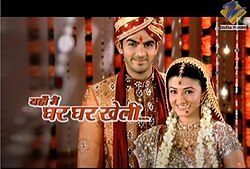
I encountered this song in a recent episode of यहाँ मैं घर घर खेली. Looks like TV serial producers in India have been making use of past melodies from Bollywood films to suit their stories.
Good business for those owning copyrights on these old songs.
Good business for those owning copyrights on these old songs.
Sunday, January 29, 2012
नीला आसमाँ सो गया (female)
This is the Lata Mangeshkar version that sings about lost love.
The music punctuates the narration of the story nicely to bring out the emotion. You can relish the male version here."The night got killed when the moon disappeared in [my] tears.
Loneliness is what fills in [the rest of my] life"
Wednesday, January 25, 2012
Friday, January 13, 2012
Subscribe to:
Posts (Atom)